
Systems Thinking & Engineering Decision-Making in Software Development
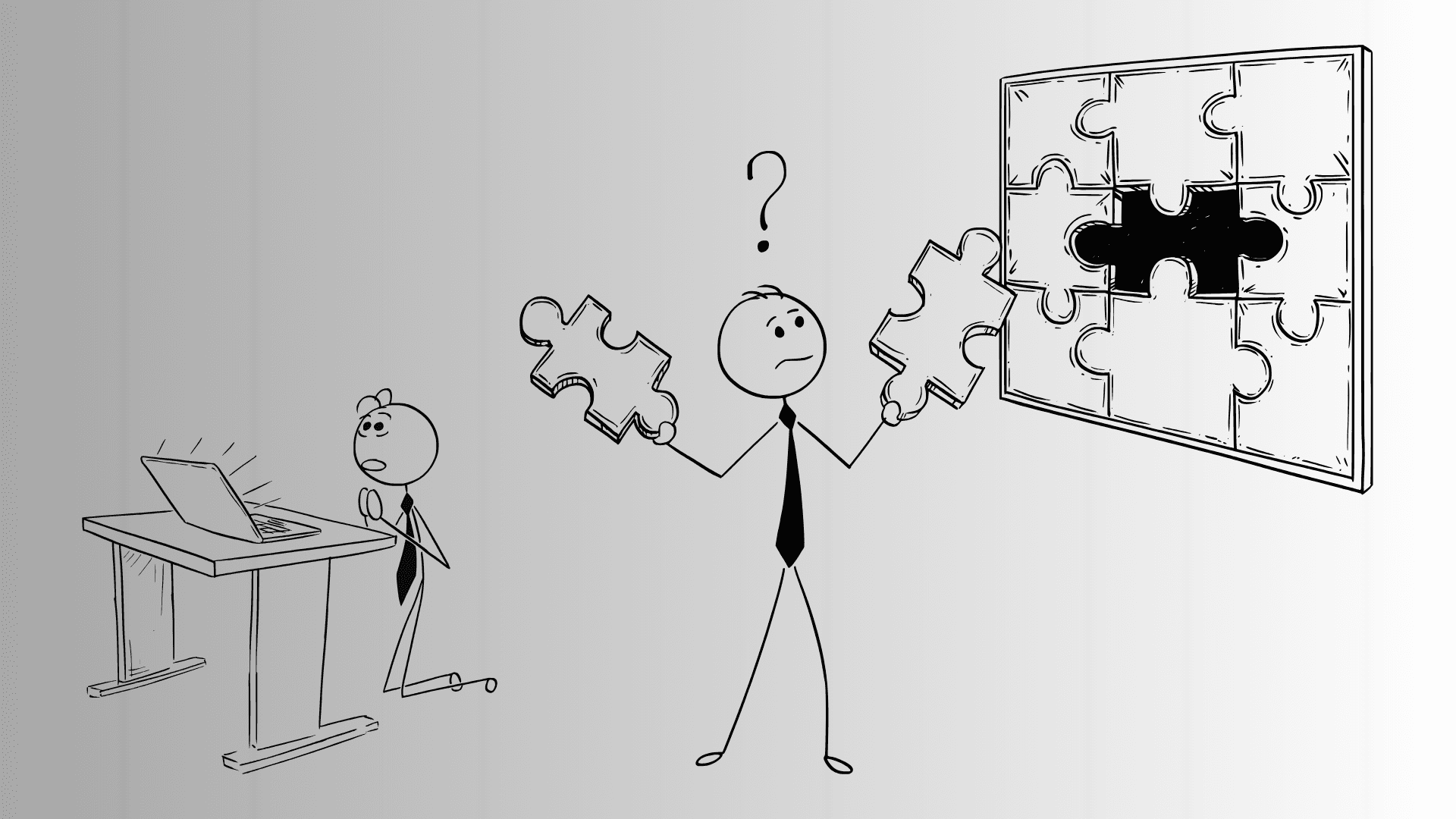
Most programming content I've come across focuses on syntax, frameworks, or how to build a generic app in ten minutes. That’s great for learning how to replicate a result, but it does absolutely nothing to build engineering competence.
Real engineering rarely begins in the IDE. It begins with constraints, ambiguity, and trade-offs. The dividing line between a developer who can follow a tutorial and an engineer who can design a resilient system isn’t language proficiency. It is the ability to apply structured thinking under uncertainty.
The "Solution-First" Trap
A typical failure mode—especially early in a career—is solution-first thinking. You get a jira ticket, open your editor, and you start typing. You pick tools you already know, figure out the design as you go, and patch over edge cases as they blow up in testing.
This approach will eventually produce working software, but the structural damage is already done. Components are tightly coupled. Dependencies are hidden. Testing requires spinning up the entire environment, and the system becomes operationally fragile.
The issue here isn't a lack of coding skill but a premature commitment to a solution. Systems thinking forces you to delay that commitment long enough to actually understand the problem space. It shifts your perspective from seeing a single script or feature to seeing a living set of interacting parts.
Code is Secondary to Data Flow
Many systems fail not because the logic is flawed, but because the movement of data was never clearly mapped out. If you want to understand a system, follow the data.
Shift your mindset from “what code do I write?” to “how does data move through this environment?” You need to be able to explicitly trace where data originates, how it is transformed, where it is validated, and where it exits.
Take a log analyzer. A junior developer or sysadmin sees it as a script that reads a text file. A systems thinker sees a pipeline: raw data streams in, gets parsed into structured records, filtered, aggregated into metrics, and eventually stored or emitted. If you can't describe that flow in plain language, your system design isn't stable enough to start coding. Code is just the plumbing used to implement this flow.
Engineering Comes Down to Trade-offs
A persistent industry myth is that there is always a "best" tool or approach. In reality, engineering is almost entirely about weighing competing constraints. You aren't picking the "best" option, instead, you are choosing the trade-offs you are most willing to live with.
Take a simple file-processing task in Python. You can read the entire file into memory, or you can stream it line-by-line. Neither is universally correct. Reading it into memory is simpler and faster for small files, but it will crash your server if the file is 50GB. Streaming is safer for memory, but adds complexity and might bottleneck I/O. The correct answer is dictated by the context—file size, memory limits, and performance requirements—not by what you prefer writing.
This applies everywhere, even down to standard libraries. Do you use os.path or pathlib in Python? Both work. The decision rests on team conventions, API consistency, and long-term maintainability. An experienced engineer doesn't operate on default settings; they evaluate what the current context demands.
Designing for When Things Break
Systems thinking means accepting that failure is a feature of the system, not a rare exception to it.
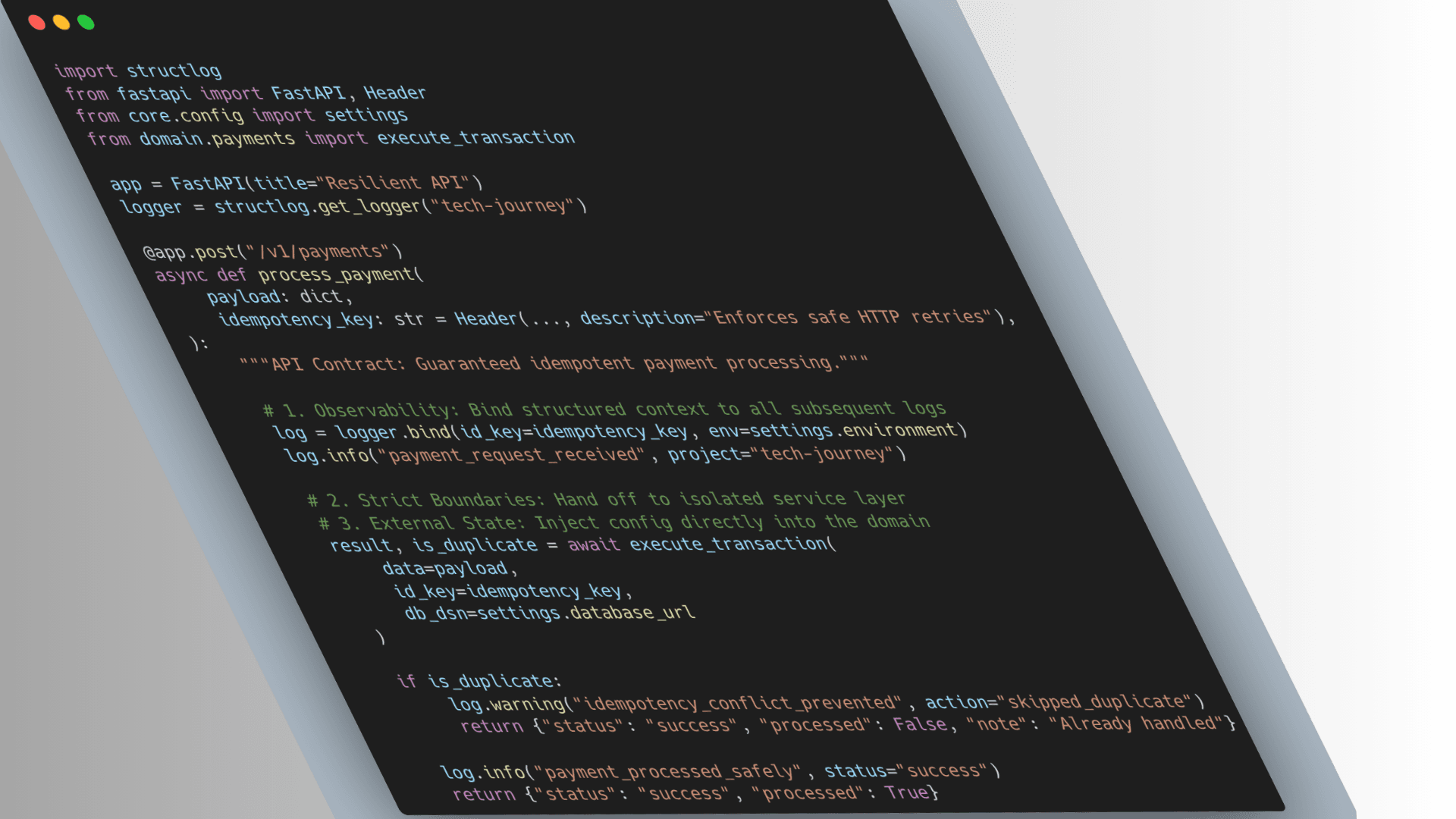
If your code only works under ideal conditions, it is incomplete. Networks partition. Databases lock up. Third-party APIs timeout. Users upload 4GB binaries instead of CSVs. An engineered system defines exactly how it will behave under these failure states. Logging, structured error handling, and observability aren't "nice-to-have" add-ons you bolt on at the end but foundational to the design.
The Heuristics of System Design
You don't need a heavy, bureaucratic process to make good engineering decisions. You just need a mental scaffold before you commit to an implementation:
The Actual Problem: What are we actually trying to solve? What is explicitly out of scope?
The Architecture: What are the logical components, and how does data pass between them?
The Cost: What dependencies are we introducing? What is the long-term maintenance tax of this approach?
The Failure State: What happens when this breaks? How will we know it broke? How is the blast radius contained?
The Scale: What happens if volume 10x's tomorrow?
Tools will inevitably change. You will move between Python, C#, Go, Javascript, or whatever comes next. But the necessity to structure problems, evaluate trade-offs, define boundaries, and mitigate failures will never go away.
Syntax is temporary. Systems thinking is permanent.